janeiro 27, 2011
janeiro 24, 2011
Fronteiras
Por João Neto às 10:44
janeiro 20, 2011
janeiro 17, 2011
Ficções
Por João Neto às 07:40
janeiro 14, 2011
Gestão danosa
Por João Neto às 10:31
janeiro 06, 2011
Initio
Por João Neto às 12:31
janeiro 04, 2011
Ontologia
Por João Neto às 08:17
dezembro 14, 2010
Separação
Por João Neto às 10:02
dezembro 09, 2010
Contexto
The context of discovery refers to how new ideas are generated in science. Playing off of Thomas Kuhn’s work on paradigms (and without getting into a side discussion of Kuhn’s own position), some post-modernists argued that science is a humanist-type of endeavor because scientists come up with their ideas in quirky and culturally contingent ways, rather than rigorous or methodical ways. However, what makes science methodologically rigorous is not how new ideas are generated (the context of discovery) but how they are tested (the context of later justification)." Steve Novella, citado do post The Context of Anecdotes and Anomalies
Por João Neto às 13:06
novembro 25, 2010
Teoria de Grafos
Por João Neto às 06:14
novembro 22, 2010
Compromisso
Por João Neto às 12:52
novembro 13, 2010
Pendor
Por João Neto às 21:27
novembro 02, 2010
Constituição
Por João Neto às 09:31
outubro 28, 2010
you gotta have faith, as required by law

Por João Neto às 10:17
outubro 25, 2010
Lindo!
- making it still harder;
- redefining what we mean by ‘solving’ it, so that it becomes something we can do;
- inventing a dignified and technical-sounding word to describe this procedure, which has the psychological effect of concealing the real nature of what we have done, and making it appear respectable.
- Suppose that, after tossing the ball in, we shake up the urn. However complicated the problem was initially, it now becomes many orders of magnitude more complicated, because the solution now depends on every detail of the precise way we shake it, in addition to all the factors mentioned above.
- We now assert that the shaking has somehow made all these details irrelevant, so that the problem reverts back to the simple one where the Bernoulli urn rule applies.
- We invent the dignified-soundingword randomization to describe what we have done. This term is, evidently, a euphemism, whose real meaning is: deliberately throwing away relevant information when it becomes too complicated for us to handle.
At this point, you may accuse us of nitpicking, because you know that after all this sermonizing, we are just going to go ahead and use the randomized solution like everybody else does. Note, however, that our objection is not to the procedure itself, provided that we acknowledge honestly what we are doing; i.e. instead of solving the real problem, we are making a practical compromise and being, of necessity, content with an approximate solution. That is something we have to do in all areas of applied mathematics, and there is no reason to expect probability theory to be any different. E.T. Jaynes, Probability Theory, The Logic of Science
Por João Neto às 21:27
outubro 21, 2010
outubro 18, 2010
Rumo
Por João Neto às 06:36
outubro 14, 2010
Equilíbrio
Por João Neto às 09:00
outubro 09, 2010
Não fazemos porque não sabemos
You insist that there is something a machine cannot do. If you will tell me precisely what it is that a machine cannot do, then I can always make a machine which will do just that!
Por João Neto às 09:15
outubro 06, 2010
setembro 30, 2010
Aplicação
Por João Neto às 07:23
setembro 27, 2010
Estilhaços
Por João Neto às 08:20
setembro 23, 2010
Sugestão de Leitura
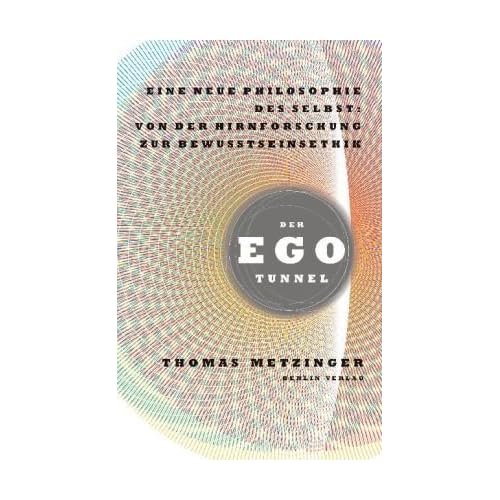
In order to survive, biological organisms must not only successfully predict what is going to happen next in their immediate environment but also be able to predict accurately their behavior and bodily movements along with their consequences. The self-model is a real-time predictor. [...] In our brains, we have a body emulator that uses motor commands to predict the likely proprioceptive and kinesthetic feedback that results from moving our limbs in a certain way. For our actions to be successfully controlled, we cannot wait for the actual feedback from our arms and legs as we move through the world. We need an internal image of our body as a whole that predicts the likely consequences of, say, an attempt to move our left arm in a certain way. In order to be really efficient, we need to know in advance what this would feel like. Furthermore, by “taking it offline,” we can use our body emulator to create motor imagery in our mind—to plan or imagine our body movements without actually executing them. [pg.111]
Por João Neto às 14:06
junho 27, 2010
Paradoxo
Por João Neto às 19:01
junho 24, 2010
Insectos
Por João Neto às 13:56
junho 21, 2010
Adiar
Por João Neto às 10:18
junho 17, 2010
Reconstrução
* É através da educação que se dilui a diferença das classes sociais. O sistema de castas ainda existe nas sociedades modernas. Este mecanismo, mais subtil que as castas explícitas da Índia, cria muros invisíveis (por vezes nem tanto) entre pessoas de nascimentos distintos. Há círculos mais selectivos onde apenas é convidado quem tem pedigree aprovado e pouco mais que isso. A sua existência não se correlaciona com o poder económico. Entre certas comunidades ciganas e a linha de cascais, o mecanismo de exclusividade funciona de igual modo na selecção e filtro dos seus e que passa, variadas vezes, pelo berço. A educação compulsiva promovida pelo Estado é uma forma de contacto entre diferentes círculos e dota os elementos menos privilegiados de ferramentas que lhes permitem furar o seu círculo e misturar-se. Neste sentido, a educação é essencial a uma comunidade cosmopolita e republicana.(*)
* Uma boa educação deve estimular o pensar crítico da comunidade, ser o agente de transformação do rebanho informe em milhões de indivíduos. Uma comunidade assim encontra-se protegida contra vários tipos de propaganda. Quando a pessoa média for capaz de analisar e questionar o que lhe é dito, torna-se a vida mais difícil para as ideologias, para a incompetência ou para serem aceites aventuras financeiras ou militares várias.
Estas e outras vantagens fazem da educação um terraplanar de muros sociais, de preconceitos passados, para que seja possível erigir outros muros, como as defesas contra arbitrariedades futuras. Neste aspecto, educar é reconstruir.
(*) Mas estas castas podem combater a imposição do Estado. Os mais pobres impedindo a educação aos filhos, os mais ricos criando escolas muradas onde apenas entram crianças aceitáveis. Aqui há um dilema de difícil resolução para um espírito liberal.
Por João Neto às 10:14
junho 15, 2010
junho 14, 2010
Combate II
Por João Neto às 10:12
junho 10, 2010
Combate
Por João Neto às 10:11